Food preparation facilities face intense scrutiny during unannounced Mecklenburg County Health Department sanitation inspections. A single observed rodent dropping or crawling pest under a hot-line prep table can…
Food preparation facilities face intense scrutiny during unannounced Mecklenburg County Health Department sanitation inspections. A single observed rodent dropping or crawling pest under a hot-line prep table can result in point deductions on a sanitation rating placard, threatening customer trust. In dense hospitality zones such as South End and NoDa, historic multi-tenant brick structures share party walls and utility raceways, allowing pests to migrate between connected business bays. For standalone restaurants along Ballantyne Commons Parkway or high-volume dining hubs in Plaza Midwood and Dilworth, outdoor trash compactors and grease interceptors generate thermal and moisture plumes that attract pests inward. Standard residential sprays fail in commercial settings because ambient kitchen heat, steam cleanings, and high-volume detergents wash away surface insecticides within 48 hours.
Effective restaurant defense separates mechanical cleaning steps from chemical exclusion. In a 1,500-square-foot kitchen operating in Elizabeth or Cotswold, applying active growth regulators behind cooklines stabilizes populations, but sealing silicone expansions around stainless steel floor sinks and copper lines stops re-entry permanently. If a facility battles an active German cockroach population inside refrigeration motor housings, non-volatile gel baits placed in out-of-reach electrical chases eradicate harboring colonies without contaminating surfaces where food is prepped. The trade-off between open broadcast fogging and precision micro-bait placement involves operational downtime: broadcast space sprays require a 6-hour facility shutdown with extensive surface re-washing, whereas systematic structural exclusion and discrete baiting occur entirely after closing hours without requiring inventory disposal.
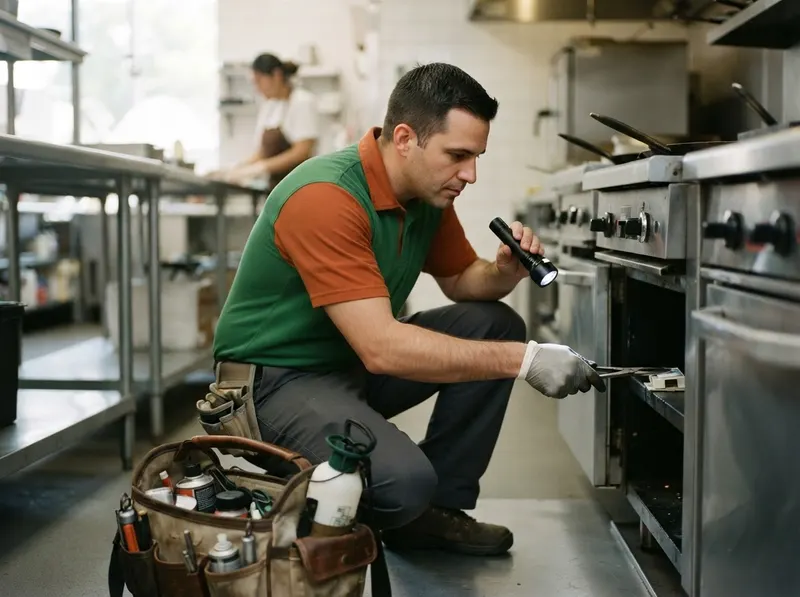
Step 1: Conduct a visual flashlight assessment of motor voids, rubber door sweeps, floor sinks, and acoustic drop-ceilings. Step 2: Clear active plumbing breeding films using non-corrosive foaming microbial solutions that consume trapped fats, oils, and grease inside grease traps. Step 3: Fasten metal mesh and commercial weather stripping across rear receiving bays, particularly loading docks close to University City distribution corridors. Step 4: Furnish immediate regulatory documentation logs recording product lot numbers and target application points to satisfy state sanitation requirements.
Every job gets a firm, written price after a free on-site visit.
Tell us about your commercial restaurant pest defense job in Charlotte and we'll send a clear, written quote, usually the same day.
 Willow Ridge Pest Control